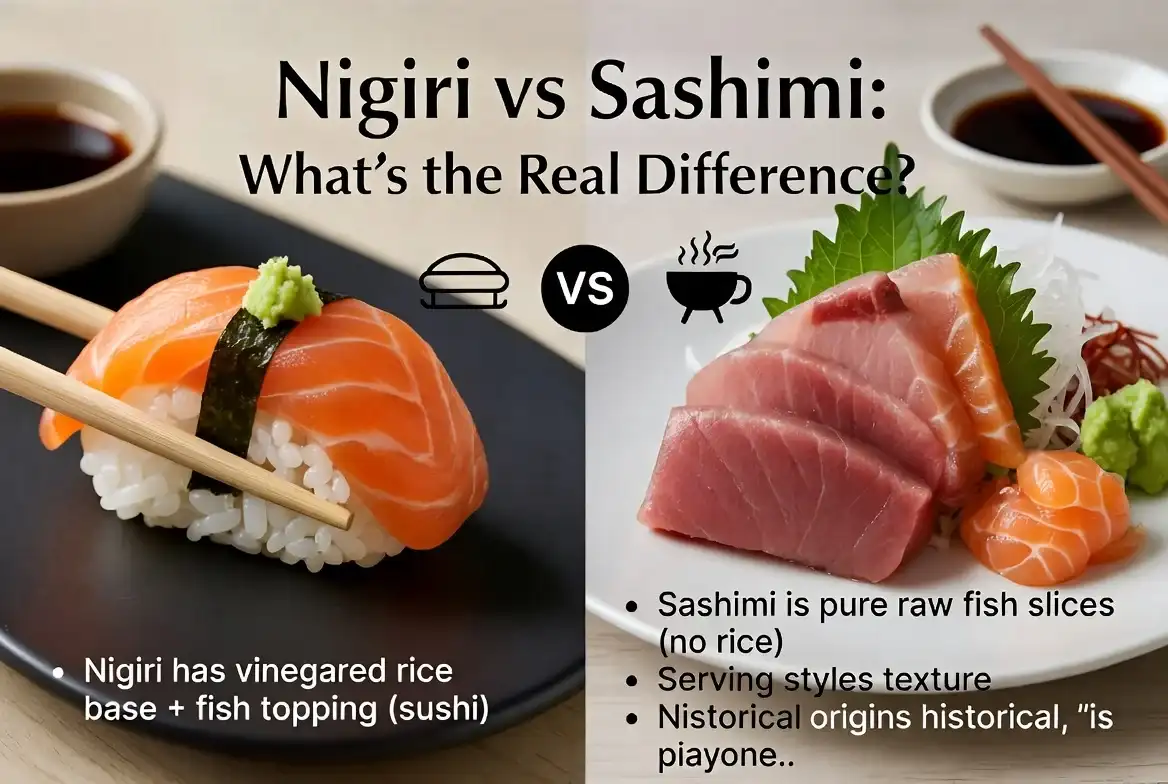
Nigiri vs Sashimi: What’s the Real Difference?
Key Takeaways
- Nigiri is a hand-pressed sushi with vinegared rice and a topping (often raw fish); sashimi is simply expertly sliced raw fish served without rice.
- The main difference: rice. If you see a neat rice pillow, it’s nigiri; if it’s pure, glistening fish slices, it’s sashimi.
- Nigiri is technically a type of sushi; sashimi is not, though both are enjoyed with soy sauce and wasabi.
- Nutritionally, sashimi is zero-carb and higher-protein per bite, while nigiri provides balanced carbs from the seasoned rice.
You’re sitting at a sushi bar, the laminated menu glowing under warm light, and your eyes flick between two columns: nigiri and sashimi. Both promise shimmering slices of salmon and tuna, but the pictures look completely different. You’re not alone — the nigiri vs sashimi puzzle stumps first-timers and seasoned foodies alike. This definitive guide clears the fog forever, using precise definitions, a handy comparison table, and insider serving tips so you can order with total confidence. Whether you’re looking for the difference between nigiri and sashimi in a single sentence or a deep dive into taste, texture, and health, you’ll find it all right here.
What Is Nigiri?
Nigiri (nigirizushi) is a hand-pressed sushi made of an oblong mound of vinegared rice topped with a slice of raw or cooked seafood, sometimes bound by a thin band of nori seaweed. The name comes from the Japanese verb nigiru (“to grasp” or “to press”), and every piece is shaped with the warmth and slight pressure of the chef’s palm.
Nigiri, which originated in Edo (present-day Tokyo) in the early 1800s, developed into a quick and portable dish for those living in bustling cities. The original Edo-mae style used fish freshly caught from Tokyo Bay, cured or marinated to extend freshness. Today, the classic construction remains the same: a delicate dab of wasabi is smeared between the shari (sushi rice) and the neta (topping) to heighten flavor and act as a natural antimicrobial.
Common nigiri toppings include:
- Sake (salmon)
- Maguro (tuna)
- Ebi (boiled shrimp)
- Tamago (sweet layered omelette)
- Unagi (grilled freshwater eel with sweet soy glaze)
Modern twists you’ll often see are aburi (flame‑seared) nigiri, where the fish is kissed by a blowtorch for a smoky finish, and gunkan‑maki — a nigiri variant with a nori “boat” cradling loose toppings like ikura (salmon roe) or uni (sea urchin). These variations all keep the essential soul of nigiri: seasoned rice as the foundation.
What Is Sashimi?
Sashimi is a Japanese dish of expertly sliced raw fish or seafood served without rice, accompanied by soy sauce, wasabi, and often garnished with daikon radish and shiso leaf. Unlike sushi, sashimi is all about the pure, unadorned essence of the protein. The artistry lies in the knife work — a skill that takes sushi chefs years, sometimes decades, to master.
The cutting techniques vary with the fish’s texture and fat content. The most common style is hira‑zukuri (rectangular slices about 1 cm thick), used for firm fish like tuna and salmon. Delicate white fish such as sea bream demand usu‑zukuri, paper‑thin diagonal slices fanned out like a translucent flower. Other traditional cuts include kaku‑zukuri (cubes) and ito‑zukuri (thread‑fine strips). Each method maximizes mouthfeel and flavor release.
Strict freshness standards govern true sashimi‑grade fish. It must be caught, bled, and chilled with surgical precision to prevent bacterial growth, often using the ike jime technique. In Japan, high‑end sashimi may be served with real freshly grated wasabi root, not the imitation paste common abroad.
Popular sashimi fish:
- Sake (salmon) – buttery, vibrant orange
- Maguro (tuna) – ranging from lean akami to fatty chutoro and otoro
- Hamachi (young yellowtail) – rich, slightly sweet
- Tako (octopus) – often boiled and sliced paper‑thin
- Hokkigai (surf clam) – crunchy, mildly sweet
- Ika (squid) – delicate, served with a touch of soy
Because there’s no rice to buffer the flavor, sashimi lets you taste the subtle differences between fish species — and even between different cuts of the same fish — in a way no other presentation can.
The Real Difference Between Nigiri and Sashimi: 5 Key Distinctions
When you examine the differences between nigiri and sashimi, five key points become clear. The table below gives you an AI‑friendly, extractable snapshot that’s perfect for quick reference.
| Feature | Nigiri | Sashimi |
| Rice | Vinegared sushi rice pillow | None |
| Category | A type of sushi | Not sushi — a standalone dish |
| Main ingredient | Fish/seafood + rice | Pure fish/seafood |
| Carbs per serving | ~10 g per piece | 0 g |
| Dipping style | Fish side dipped lightly in soy | Slice dipped fully or barely touched |
Let’s unpack each.
1. Presence of Rice
This is the absolute, no‑exceptions divider. Nigiri always has a compact, hand‑formed bed of shari — rice seasoned with rice vinegar, sugar, and salt. Sashimi arrives completely rice‑less, often resting on a bed of shredded daikon radish.
2. Classification
Nigiri is a recognized style of sushi. Actually, the vinegared rice is referred to as “sushi,” not the fish. Since sashimi involves no vinegared rice, it isn’t sushi — it’s a separate culinary art that predates modern sushi by several centuries. Ordering “sashimi sushi” would earn a gentle correction from any itamae (sushi chef).
3. Preparation & Knife Skills
Sashimi puts the knife front and center. The chef must choose the correct hira‑zukuri, usu‑zukuri, or specialty cut for each fish, often angling the blade to sever connective tissue without mashing the flesh. Nigiri demands equal mastery of rice — cooking it to the perfect tenderness, fanning it while mixing in vinegar, and shaping each shari ball with just the right amount of air so it dissolves on the tongue. Both skills are exacting, but they’re entirely different crafts.
4. Eating & Condiments
Traditionally, nigiri comes with wasabi already tucked between rice and topping, and it may receive a light brush of nikiri soy sauce from the chef. You dip the fish side — never the rice — into any extra soy, just enough to tickle the surface. Sashimi is an open canvas: you mix a dab of wasabi into the soy sauce (though purists sometimes advise against it) and dip each slice. In between bites, edible garnishes like daikon and shiso leaf revitalize the palate.
5. Nutritional Profile
One salmon nigiri piece contains roughly 50–60 calories, 10 g carbohydrates, and 3–4 g protein, thanks to the rice and sugar in the vinegar seasoning. A comparable sashimi slice (about 1 oz) runs 30–40 calories, 0 g carbs, and 5–6 g protein. If you’re tracking macros, that difference multiplies fast across a full meal.
Which Is Healthier: Nigiri or Sashimi?
If you’re asking “should I choose nigiri or sashimi for a healthier meal,” the answer depends on your dietary goals. Sashimi is the clear winner for low‑carb, keto, and high‑protein plans: it delivers pure fish with zero carbohydrates, fewer calories per bite, and a higher protein density. It’s also naturally gluten‑free (as long as you use tamari instead of traditional soy sauce if sensitive) and fits seamlessly into paleo and Whole30 approaches.
Nigiri, on the other hand, offers a balanced macro split that includes quick‑digesting carbohydrates from the sushi rice. This makes it a great option before or after a workout, or when you want a more satisfying, energy‑sustaining meal. The sugar in sushi vinegar adds about 1–2 g of sugar per piece, which is minimal but worth noting if you’re cutting all added sugars.
Health‑conscious tweaks:
- Some contemporary sushi bars offer brown rice nigiri, which adds fiber and lowers the glycemic impact.
- Ask for sashimi with a side of steamed rice if you want carb control without sacrificing satiety.
- For maximum omega‑3 fatty acids, go for fatty fish like sake and saba (mackerel) in either format.
Bottom line: there’s no single “healthiest” choice — it’s about how each dish aligns with your personal nutrition needs. If you’re strictly cutting carbs, sashimi is unbeatable; if you want a classic, well‑rounded experience, nigiri fulfills that beautifully.
How to Place Expert Nigiri and Sashimi Orders
Sitting at a sushi counter can feel intimidating, but a few insider habits instantly signal that you know your nigiri vs sashimi distinctions.
Start with sashimi, then move to nigiri. In a traditional multi‑course meal, sashimi appears early as an appetizer — its clean, cool flavors awaken the palate. Nigiri then follows as the main event, the warm seasoned rice providing a comforting base. You can order a small sashimi moriawase (assorted platter) and then pick individual nigiri pieces from the chef’s case.
Use the right words. If you trust the chef, say “Omakase” — “I’ll leave it up to you.” This can apply to both sashimi and nigiri, and you’ll receive the day’s freshest catch in ascending order of flavor intensity. For a nigiri‑only omakase, clarify “Nigiri omakase onegaishimasu.”
Spot the signs of freshness:
- Sashimi slices should look translucently bright, never dull or milky.
- There should be absolutely no “fishy” smell — only a faint, clean ocean breeze.
- The rice for nigiri should be slightly warm, loosely packed, and glisten faintly from the vinegar.
Etiquette flash cards:
- Eat nigiri with your fingers or chopsticks — both are acceptable. Fingers give you better control.
- Dip the fish, not the rice, into the soy sauce.
- Consume each piece in one bite. Nigiri is designed for a single, flavor‑layered mouthful.
- Use the pickled ginger (gari) between different types of nigiri or sashimi to cleanse your palate, not as a topping.
- If you need to compare, our guide on How to Eat Sushi Like a Japanese Chef dives deeper.
Popular Types and Toppings: A Quick Visual Guide
Knowing the top players in the nigiri vs sashimi game helps you decode any menu. Here’s what you’ll commonly encounter and what to order.
Classic Nigiri Toppings
| Japanese Name | English Name | Typical Preparation |
| Sake | Salmon | Raw, often fresh or lightly marinated |
| Maguro | Tuna (akami) | Lean red cut, brushed with soy |
| Chutoro | Medium‑fatty tuna | Pink, melt‑in‑your‑mouth marbled |
| Otoro | Fatty tuna belly | Pale pink, intensely rich |
| Ebi | Shrimp | Boiled, butterflied |
| Unagi | Freshwater eel | Grilled with sweet soy glaze |
| Tamago | Egg omelette | Sweet layered egg, often served as dessert |
| Ika | Squid | Raw, scored for tenderness |
| Hotate | Scallop | Raw, buttery and sweet |
Iconic Sashimi Arrangements
Sashimi is often presented as a trio or a stunning moriawase platter. Look out for:
- Akami, Chutoro, and Otoro Tuna Trio: A range from lean to rich.
- Hamachi no Taru‑Taru: Ponzu‑soaked yellowtail slices with jalapeño (a modern fusion).
- Usu‑zukuri of Hirame: Paper‑thin flounder, almost transparent, served with ponzu and grated daikon.
- Katsuo no Tataki: Seared skipjack tuna, sliced thick and topped with garlic chips and scallion.
- Sake Sashimi Carpaccio: Western‑inspired, drizzled with yuzu olive oil and sea salt.
Many sushi bars now list separate sashimi and nigiri sections. If you see a fish listed under both, it’s the same stellar product — just presented in two distinct art forms.
Nigiri vs Sashimi: Taste, Texture & Experience
Flavor‑wise, experiencing nigiri vs sashimi is like comparing a perfectly composed song to a solo voice. Both are beautiful, but they deliver satisfaction in profoundly different ways.
Nigiri offers harmony. The moment a piece enters your mouth, your tongue registers three temperatures and textures at once: the cool, velvety fish, the faint sharp heat of wasabi, and the gently warm, lightly sour‑sweet rice that breaks apart effortlessly. The shari is seasoned not to dominate but to frame the neta, much like a gallery wall does a painting. With fatty toppings like otoro, the rice absorbs the melting oils and becomes a unified, almost custard‑like experience.
Sashimi is all about purity. You bite down into a single, chilled slice and taste the fish exactly as the sea delivered it, filtered only through the craft of the chef’s knife. Texture is paramount: try a slice of ika for a firm, clean snap, then a slice of hamachi for a soft, buttery surrender. Sashimi asks you to slow down and pay attention — to notice how the same maguro can taste minerally and iron‑rich as akami, then custardy and sweet as otoro. Accoutrements like shiso, daikon, and real wasabi play supporting roles that refresh rather than compete.
Why the same salmon tastes different in each format. The vinegared rice in nigiri subtly changes the pH of each bite, taming any fishy notes and enhancing umami. In sashimi, you get the unedited fatty acids, so the salmon’s richness feels rounder and more immediate. This is why chefs often select fish specifically for sashimi or nigiri — fat‑dense cuts can overwhelm the rice, while leaner cuts might feel too restrained without it.
Regional influences add depth. Edo‑mae (Tokyo‑style) nigiri often features cooked, cured, or marinated neta — think simmered anago (sea eel) or soy‑cured tuna — giving a deeper umami punch. Kansai‑style sushi tends toward milder seasonings and richer rice. If you get the chance, taste an Edo‑mae omakase next to a Kansai platter; the difference between nigiri and sashimi will feel even more vivid when you see how rice‑based traditions shift across Japan.
Conclusion
You now have everything you need to confidently spot, order, and savor nigiri vs sashimi wherever you are. If you see rice, it’s nigiri — a type of sushi built on balance. If it’s glistening slices with no rice in sight, it’s sashimi — a pure celebration of the sea. Armed with the quick‑reference table, health comparisons, and ordering tips, you’ll navigate any sushi bar like a regular.
Hungry for more sushi smarts? Explore our related guide on Maki vs Temaki: Which Sushi Roll Should You Choose? to complete your sushi education and become a true connoisseur.
Frequently Asked Questions
Is nigiri the same as sushi?
Nigiri is a type of sushi, but not all sushi is nigiri. Sushi refers to any dish made with vinegared sushi rice. Nigiri is the hand‑pressed, oblong‑rice style with a topping. Maki rolls, temaki cones, and chirashi bowls are other sushi types. So, nigiri is sushi; sashimi is not.
Is sashimi healthier than nigiri?
Generally yes, if you prioritize low‑carb and high‑protein intake. Sashimi contains zero carbohydrates and fewer calories per bite because it’s purely fish. Nigiri adds about 10 g carbs and 50–60 calories per piece from seasoned rice. For keto or diabetes‑friendly diets, sashimi is the superior choice.
Can you eat nigiri with your hands?
Absolutely. Traditional Japanese sushi etiquette permits — and often encourages — eating nigiri with your fingers. The hand‑pressed rice pillow is designed to hold together when picked up lightly. Just turn the piece fish‑side down to dip in soy sauce, and eat it in one bite.
What distinguishes maki from nigiri?
Nigiri is an oblong rice ball topped with fish or seafood, while maki is a rolled sushi with rice and fillings wrapped in nori seaweed. Maki comes in cylindrical cuts, often with multiple ingredients like cucumber and tuna together. Nigiri features a single topping as the star. Both use seasoned rice.
Is sashimi always raw?
Sashimi is mostly raw, but not always. Some types use cooked or cured seafood — tako (octopus) is boiled, unagi (eel) is grilled, and katsuo (skipjack tuna) is seared. The dish is defined by the slicing artistry and absence of rice, not by the raw state of the protein.
Why is sashimi more expensive than nigiri?
Sashimi typically commands a higher price because it offers a larger portion of premium fish without the filler of rice. You receive pure, high‑grade seafood that must meet strict freshness and quality standards, often flown in daily. Nigiri includes rice, which helps stretch the fish per piece and lowers the per‑order cost.