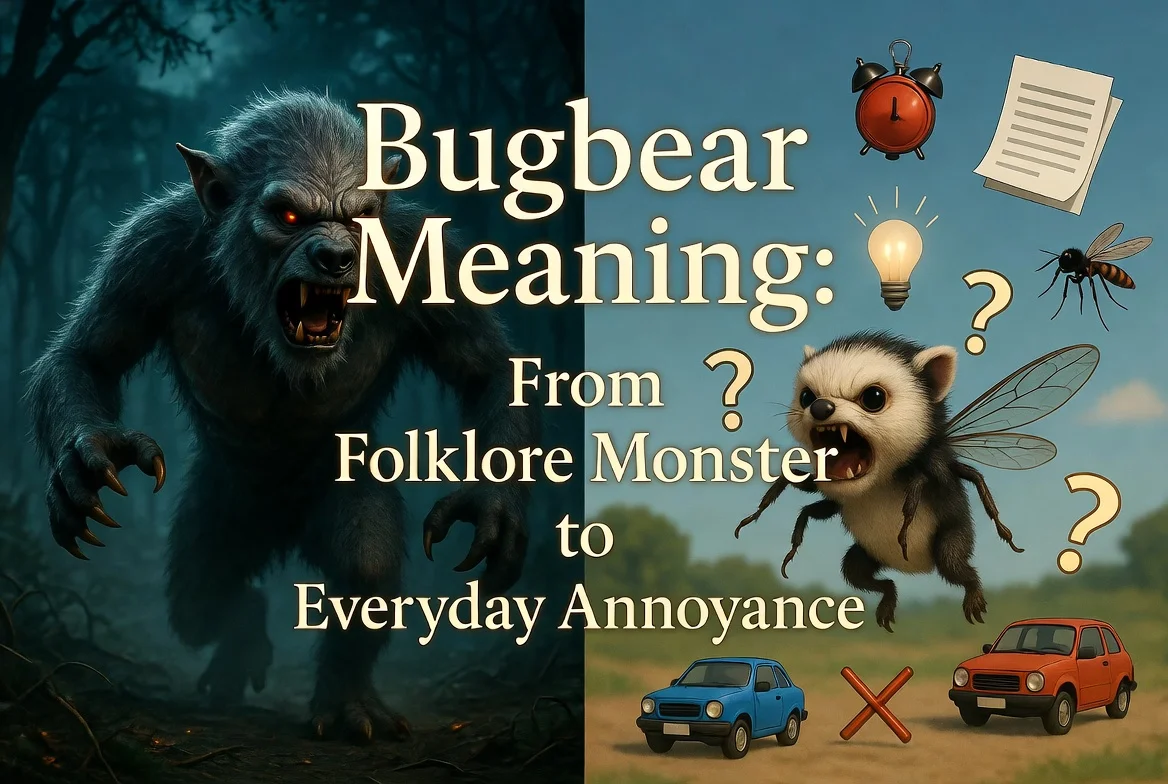
Bugbear Meaning: From Folklore Monster to Everyday Annoyance
You’ve heard the word bugbear, but do you truly understand its meaning? Many dismiss it as an odd compound of “bug” and “bear,” missing its centuries-old folklore. That confusion means you aren’t tapping into a powerful linguistic tool. This definitive guide lays bare the genuine bugbear meaning, traces its spooky origins, and shows you exactly how to use it with confidence.
What Exactly Is a Bugbear? The Core Bugbear Meaning
A bugbear is an imaginary creature, typically a hobgoblin or specter, used to frighten children. The bugbear meaning also extends to any persistent source of fear, anxiety, or annoyance. Think of it as a mental monster. When someone says, “Losing my keys is my biggest bugbear,” they point to a nagging pet peeve. This twofold definition—a literal folk monster and a figurative nuisance—gives the word its lasting power.
The Oxford English Dictionary traces the word bugbear to “an object of dread or loathing, a bogy.” Merriam-Webster defines it as both a frightening imaginary being and a cause of irritation. That dual identity is exactly why the term survives.
The Etymological Roots of “Bugbear” – Old English Origins
The word “bugbear” marries two older terms. “Bug” comes from the Middle English bugge, meaning a frightening specter or hobgoblin (the same root that gives us “bugaboo” and “bogeyman”). “Bear” joined later, invoking the real animal’s fearsome strength. People paired the two to amplify the terror—a ghostly creature as scary as a wild bear.
According to the Oxford English Dictionary, the first recorded use of “bugbear” appeared in the 16th century. Early citations describe it as “a walking bugbear” or “a fearful bugbear,” used to scare children into obedience. Parents would warn that the bugbear lurked in dark corners, ready to snatch misbehaving youngsters. Over time, the bugbear meaning evolved beyond the nursery threat into a broader metaphor.
Bugbear in Folklore: A Creature of Nightmares
Folklorist Katharine Briggs, in her encyclopedia An Encyclopedia of Fairies, describes the bugbear as a type of hobgoblin attached to specific families or places. Unlike helpful brownies, bugbears thrived on menace. They hid under beds, in wardrobes, and within shadowy woods. Families told tales of bugbears dragging naughty children into the night—an early behavior-correction tool.
In Celtic and English traditions, these creatures ranked among the bogeyman family, shapeshifting to exploit a child’s worst fear. A bugbear might appear as a growling bear one night and a cloaked figure the next. This fluidity cemented the bugbear meaning as the ultimate personalized terror, long before psychologists studied childhood fear.
How the Bugbear Became a Metaphor for Fear
By the 17th century, writers started using “bugbear” figuratively. The shift in bugbear meaning moved from a tangible goblin to an abstract dread. A person could label debt, illness, or political enemies as bugbears. These weren’t literal monsters but felt just as menacing.
This figurative leap stuck because it captures how our brains work. A real fear (a bear attack) and a perceived threat (public speaking) activate the same amygdala response. Calling anxiety triggers “bugbears” acknowledges their emotional weight while hinting at their often exaggerated nature. The bugbear meaning thus became a sharp tool for self-awareness.
Bugbear vs. Bogeyman: What’s the Difference?
People often confuse bugbears with bogeymen. While the bugbear meaning shares common ground, clear distinctions exist.
| Bugbear | Bogeyman |
| A hobgoblin or specter originally from English folklore | A generic monster figure found across cultures |
| Name derives from “bug” (spook) + “bear” | Name derives from “bogey” (scary being) alone |
| Dual identity: literal creature and figurative annoyance | Primarily a literal child-frightener |
| Often attached to a particular place or family | Usually an amorphous, widely known threat |
Use the table above to keep the terms straight. In everyday speech, “bugbear” now carries that extra layer of meaning as a personal irritation, while “bogeyman” remains firmly in the realm of mythical child-terror.
Literary Bugbears: From Shakespeare to Dungeons & Dragons
William Shakespeare wielded the bugbear meaning for dramatic effect. In The Winter’s Tale, a Clown describing a rampaging bear declares, “they say it is a bugbear.” Shakespeare’s usage reflects the early modern view of the creature as a frightful beast. David and Ben Crystal’s Shakespeare’s Words confirms this line reinforces the monster’s scare factor.
Centuries later, the bugbear crept into role-playing games. Features of Dungeons & Dragons Folklore describes bugbears as massive, hairy goblinoids that are vicious ambush predators. While the game’s bugbears evolved into combat brutes, the core bugbear meaning endures: a lurking threat that feeds on fear. J.K. Rowling’s Boggarts, shape-shifters that become a person’s greatest terror, also echo the ancient bugbear tradition of personalized fear.
The Psychology of Bugbears: Why We Create Monsters
Why does every culture invent bugbears? Developmental psychologist Paul L. Harris, in The Work of the Imagination, explains that children populate their worlds with imaginary threats to practice coping with real dangers. A bugbear under the bed serves as a safe stand-in for life’s uncontrollable fears—darkness, abandonment, the unknown.
This psychological function shapes the bugbear meaning far beyond folklore. As adults, we transfer that pattern to minor anxieties. The customer service call you dread, the cluttered inbox—modern bugbears—trigger the same primitive alarm system. Recognizing your bugbears names those fears, shrinking their power.
Modern Usage of Bugbear: From Fears to Pet Peeves
Today, the bugbear meaning has softened into a term for a persistent annoyance or pet hate. British English especially loves this usage. Someone might groan, “Slow walkers are my personal bugbear,” meaning the behavior irritates them intensely, though not terrifyingly.
Examples of modern bugbears include:
- People talking loudly on their phones in public.
- Unreliable Wi-Fi connections.
- Autocorrect that changes perfectly good words.
- Leaving the toilet seat up.
Notice how these aren’t life-threatening. The hyperbolic language of “bugbear” adds humor and relatability. The bugbear meaning now lets you express exasperation without sounding melodramatic.
Bugbear Synonyms and Related Terms You Should Know
A firm grasp of the bugbear meaning shines when you compare it with synonyms and near-synonyms. Use this list to choose the perfect word:
- Hobgoblin – A mischievous imp or sprite; more playful than a bugbear.
- Bogeyman – A mythical being used to scare children; lacks the pet-peeve sense.
- Bugaboo – An imaginary object of fear; archaic, often used for silly fears.
- Bête noire – A person or thing one particularly dislikes; closely matches the figurative bugbear.
- Pet peeve – A minor annoyance frequent in daily life; the most common modern equivalent.
- Anathema – Something vehemently disliked; stronger, more formal.
If you want to capture that perfect mix of dread and irritation, “bugbear” hits the sweet spot.
How to Use “Bugbear” Correctly in a Sentence
Master the bugbear meaning by seeing it in action. Follow these simple rules: use “bugbear” as a noun, and let context clarify whether you refer to a literal monster or a figurative annoyance.
Literal, folklore sense:
- “A bugbear haunted the mill at midnight, according to the traditional myth.”
- “Children huddled closer as Nana described the bugbear’s shaggy coat and glowing eyes.”
Figurative, modern sense:
- “Spam emails are my biggest bugbear; they waste so much time.”
- “Unreliable rail service continues to be a continuous annoyance for many commuters.”
Pair the word with possessive adjectives (my, your, his) to emphasize a personal annoyance. This small tweak makes your language crisp and relatable.
Frequently Asked Questions About Bugbear Meaning
What is the bugbear meaning in simple terms?
The bugbear meaning is twofold. Literally, it’s a mythical creature or hobgoblin used to scare children. Figuratively, it refers to a persistent source of fear, annoyance, or irritation, much like a pet peeve.
Where does the word bugbear come from?
It originated from the Middle English bugge, meaning a frightening specter, combined with “bear.” The resulting compound amplified the terror, and the first written bugbear appeared in 16th-century texts.
How is bugbear used in modern English?
Modern English uses “bugbear” predominantly to describe a personal annoyance or pet hate. For example, “Loud chewing is my bugbear.” The word retains its edge as a slightly dramatic, humorous complaint.
Is a bugbear the same as a bogeyman?
Not exactly. While both scare children, bugbears include a clear figurative use as a daily irritation. Bogeyman lacks that secondary sense. Historically, bugbears often inhabited specific locations, whereas bogeymen roamed more freely in lore.
Can a bugbear be a person?
Yes, you can call a person your bugbear if they consistently annoy or intimidate you. However, the word bugbear usually applies to behaviors or traits rather than whole individuals. It sounds more natural to say, “His continual interruption is my bugbear,” rather than, “He is my bugbear.”
What are common examples of bugbears?
Common bugbears include slow internet, people who don’t clean up after their dogs, unsolicited advice, and endless robocalls. These everyday nuisances fit the modern sense of bugbear perfectly.
Own the Bugbear Meaning and Share Your Story
You’ve walked the path from darkened folkloric bedrooms to today’s lighthearted complaints. That journey reveals why the bugbear meaning refuses to fade—it gives shape to both ancient terrors and modern micro-stresses. When you name your bugbear, you tame it.
What harmless monster haunts your daily routine? Drop your biggest bugbear in the comments. Share this guide with a friend who loves words and folklore—you’ll both never hear “bugbear” the same way again.