Ray Charles: The Genius Who Built Soul Music From the Ground Up
Most music fans know the voice but miss the story behind it. Ray Charles overcame blindness, poverty, and addiction to reshape American music forever. Without understanding his journey, you only hear half the song. This guide walks you through every chapter of his extraordinary life, from a small Florida town to the global stage, so you finally grasp why the world still calls him a genius.
Who Was Ray Charles and Why Does He Matter?
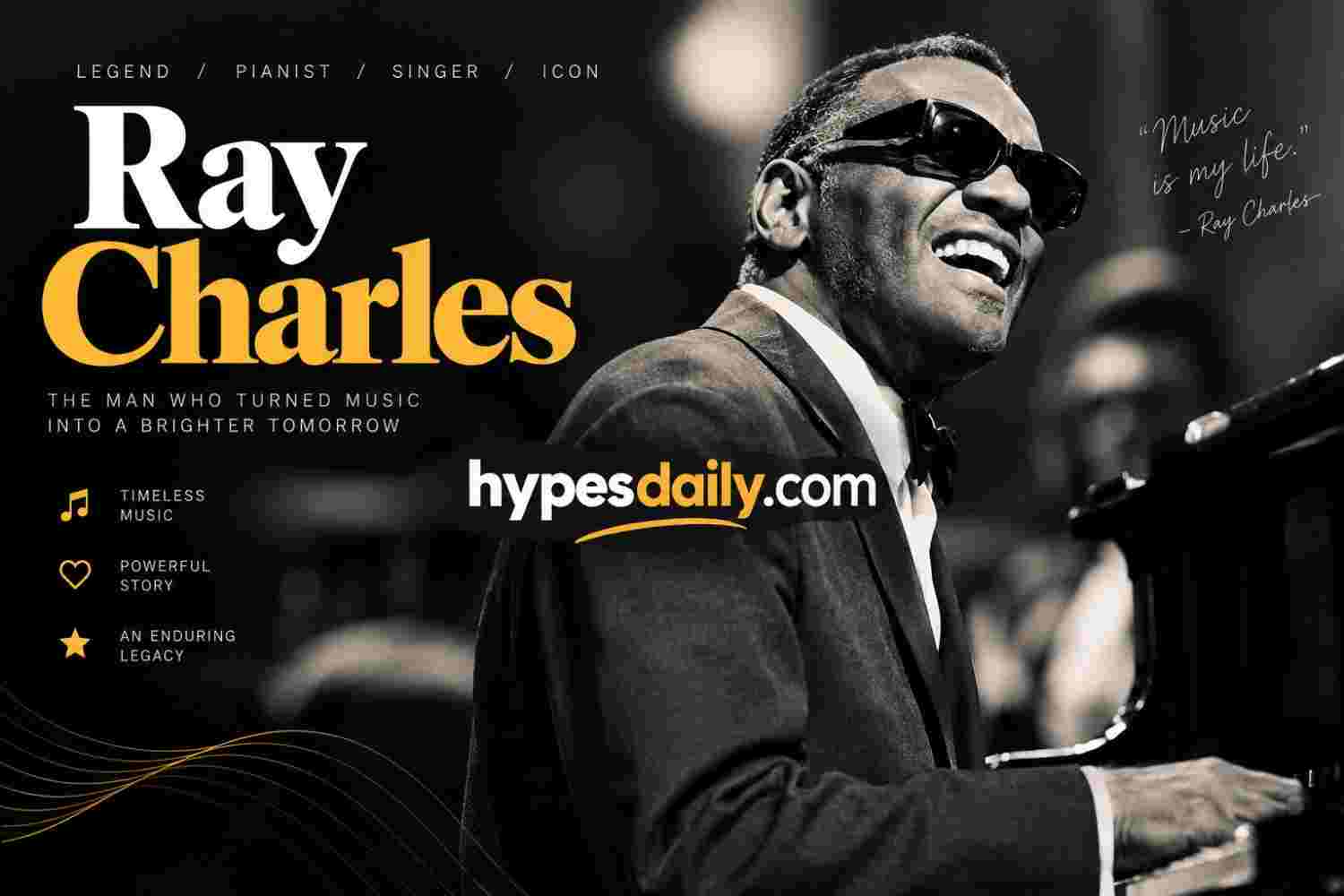
Ray Charles Robinson was born on September 23, 1930, in Albany, Georgia. He grew up to become one of the most important American musicians of the 20th century. He blended gospel, blues, jazz, and country into a sound nobody had heard before.
Frank Sinatra gave him the nickname “The Genius,” and the title stuck for good reason. He played piano, sang, wrote songs, and arranged music with a skill that crossed every genre boundary. His work laid the direct foundation for soul music as we know it today.
| Detail | Information |
|---|---|
| Full Birth Name | Ray Charles Robinson |
| Date of Birth | September 23, 1930 |
| Birthplace | Albany, Georgia, USA |
| Date of Death | June 10, 2004 |
| Primary Genres | Soul, R&B, Gospel, Jazz, Country |
| Instruments | Piano, Vocals, Saxophone |
| Known Alias | The Genius, Brother Ray |
Where Did Ray Charles Grow Up?
He spent his earliest years in Albany before his family moved to Greenville, Florida. Greenville was a small, segregated town where life was hard for Black families in the 1930s. His mother, Aretha Williams, raised him with fierce determination and high expectations.
The local general store owner, Wylie Pitman, let young Ray tinker with the piano in the back room. That old upright piano became his first classroom. Pitman taught him basic boogie-woogie patterns, and the boy absorbed every note like a sponge.
| Childhood Location | Key Detail |
|---|---|
| Albany, Georgia | Birthplace, lived there briefly |
| Greenville, Florida | Hometown where he grew up |
| Family Home | Raised by his mother Aretha Williams |
| First Piano Access | Wylie Pitman’s general store |
| School | Florida School for the Deaf and Blind (St. Augustine) |
| Age He Left Home | 15, after his mother passed away |
How Did Ray Charles Lose His Sight?
He started losing his vision around age five. By age seven, he was completely blind. Doctors at the time pointed to glaucoma, though the exact cause remains debated among medical historians.
His mother refused to let blindness define his future. She pushed him to learn daily tasks independently, from cooking to navigating the neighborhood. That toughness shaped the self-reliance he carried throughout his entire career.
| Vision Timeline | Event |
|---|---|
| Age 4–5 | Vision problems began |
| Age 7 | Fully blind |
| Suspected Cause | Glaucoma |
| Mother’s Response | Taught independence and resilience |
| Education Shift | Enrolled at Florida School for the Deaf and Blind |
| Skills Learned at School | Braille music notation, piano, clarinet, saxophone |
What Made Ray Charles the Father of Soul Music?
Before the late 1950s, gospel music and secular rhythm and blues stayed in separate lanes. Churches frowned on mixing sacred sounds with worldly lyrics. Ray Charles broke that wall down completely.
He took the emotional structure of gospel — the call-and-response vocals, the swelling organ chords, the raw vocal delivery — and applied it to songs about love, heartbreak, and desire. The result was “I Got a Woman” in 1954, a track that shocked listeners and launched an entirely new genre.
Atlantic Records producer Jerry Wexler recognized the power immediately. He gave Ray Charles the creative freedom to experiment, and that trust paid off with a string of hits that defined the soul era.
| Musical Element | Gospel Origin | Soul Adaptation |
|---|---|---|
| Call-and-Response Vocals | Church choir tradition | Backing group The Raelettes |
| Organ and Piano Chords | Sunday worship services | Studio arrangements |
| Emotional Vocal Delivery | Spiritual testimony | Secular love songs |
| Song Structure | Hymn progressions | R&B verse-chorus format |
| Breakthrough Track | — | “I Got a Woman” (1954) |
Which Ray Charles Songs Defined His Career?
His catalog spans over six decades and includes more than 80 charting singles. A handful of tracks stand out as cultural landmarks that changed the direction of popular music.
“Georgia on My Mind” became the official state song of Georgia in 1979. “What’d I Say” pushed the boundaries of radio play with its electric energy and suggestive call-and-response. “Hit the Road Jack” remains one of the most recognizable songs in American history.
| Song Title | Year | Chart Peak | Genre | Notable Fact |
|---|---|---|---|---|
| I Got a Woman | 1954 | #1 R&B | Soul/R&B | Considered the first soul song |
| What’d I Say | 1959 | #6 Pop, #1 R&B | R&B | Banned by some radio stations |
| Georgia on My Mind | 1960 | #1 Pop | Pop/Ballad | Georgia state song since 1979 |
| Hit the Road Jack | 1961 | #1 Pop | R&B | Grammy Award winner |
| I Can’t Stop Loving You | 1962 | #1 Pop | Country | From Modern Sounds album |
| Unchain My Heart | 1961 | #9 Pop | R&B | Covered by Joe Cocker in 1987 |
| You Don’t Know Me | 1962 | #2 Pop | Country | Cross-genre breakthrough |
How Did Ray Charles Change the Music Industry?
He was one of the first Black artists to own his master recordings. In 1959, he negotiated a groundbreaking deal with ABC-Paramount Records that gave him ownership, creative control, and a higher royalty rate than almost any artist at the time.
That contract changed the power dynamic between musicians and record labels permanently. Artists after him — from Aretha Franklin to Prince — fought for the same rights he secured first.
He also refused to perform at segregated venues. In 1961, he canceled a concert in Augusta, Georgia, after learning Black audience members would be forced to sit in the balcony. The decision cost him money but earned him lasting respect.
| Industry Milestone | Year | Impact |
|---|---|---|
| Master Recording Ownership | 1959 | Set precedent for artist rights |
| ABC-Paramount Deal | 1959 | Unprecedented creative control and royalties |
| Desegregation Stand | 1961 | Canceled Augusta, GA concert over seating |
| Cross-Genre Albums | 1962 | Modern Sounds in Country and Western Music broke racial barriers |
| Label Founding | 1974 | Created Crossover Records |
What Awards Did Ray Charles Win During His Lifetime?
His trophy case rivaled any artist in history. He collected 17 Grammy Awards, including a Lifetime Achievement Award in 1987. The Recording Academy also honored his final album, Genius Loves Company, with eight Grammys after his death in 2004.
He was among the first inductees into the Rock and Roll Hall of Fame in 1986. The Kennedy Center honored him in 1986 as well, recognizing his contribution to American culture.
| Award | Year | Organization |
|---|---|---|
| Grammy Lifetime Achievement | 1987 | The Recording Academy (grammy.com) |
| Rock and Roll Hall of Fame | 1986 | Rock Hall (rockhall.com) |
| Kennedy Center Honors | 1986 | Kennedy Center |
| National Medal of Arts | 1993 | U.S. Government |
| 8 Posthumous Grammys | 2005 | The Recording Academy |
| Total Grammy Wins | — | 17 competitive + Lifetime |
Who Were the Key People in Ray Charles’ Life?
His personal life was complex and full of strong relationships. His mother, Aretha Williams, instilled the discipline that carried him through every hardship. His brother George drowned in a laundry tub when Ray was just five, a trauma that haunted him for decades.
The Raelettes, his backing vocal group, provided the signature sound behind his biggest hits. Margie Hendricks, the group’s lead singer, delivered the fierce counter-vocals on tracks like “Hit the Road Jack.”
He fathered 12 children with 10 different women. Despite the complexity, he provided for all of them financially and maintained relationships throughout his life.
| Person | Relationship | Significance |
|---|---|---|
| Aretha Williams | Mother | Raised him with discipline after his father left |
| George Robinson | Brother | Drowned at age 4; Ray witnessed the event |
| Jerry Wexler | Producer | Guided his Atlantic Records era |
| Ahmet Ertegun | Atlantic Records Founder | Signed him and supported creative freedom |
| Margie Hendricks | Raelettes Lead Singer | Iconic vocal partner on major hits |
| Della Beatrice Howard | First Wife | Married 1955–1977; three children together |
What Challenges Did Ray Charles Overcome?
Blindness was only the beginning. He battled a heroin addiction for nearly two decades, starting in his early twenties. The habit nearly destroyed his career and led to multiple arrests.
In 1965, he checked himself into a rehabilitation facility in Los Angeles. He quit cold turkey and never used heroin again. That decision saved his life and extended his career by four more decades.
He also faced relentless racial discrimination during the Jim Crow era. Touring the segregated South meant sleeping in his bus because hotels refused Black guests. He endured these conditions while delivering world-class performances night after night.
| Challenge | Period | Outcome |
|---|---|---|
| Complete Blindness | Age 7 onward | Learned Braille music, mastered multiple instruments |
| Mother’s Death | Age 15 | Left school, began professional music career |
| Heroin Addiction | 1950s–1965 | Entered rehab, quit permanently |
| Racial Segregation | 1950s–1960s | Refused segregated shows, faced arrest |
| Multiple Arrests | 1961–1965 | Used legal consequences as turning point |
How Did Ray Charles Influence Modern Artists?
His fingerprints appear across nearly every genre of modern music. Stevie Wonder has cited him as his single biggest inspiration, both musically and personally as a blind artist navigating the industry.
Aretha Franklin, who recorded on Atlantic Records after his departure, built her soul style on the template he created. Jamie Foxx won an Academy Award for portraying him in the 2004 biographical film Ray, introducing his story to a new generation.
Contemporary artists from John Legend to Alicia Keys carry his influence in their piano-driven soul arrangements. His approach to blending genres remains the standard for artists who refuse to stay in one lane.
| Modern Artist | Connection | Influence Type |
|---|---|---|
| Stevie Wonder | Direct inspiration | Musical style and blind artistry |
| Aretha Franklin | Atlantic Records successor | Soul vocal technique |
| Jamie Foxx | Portrayed him in Ray (2004) | Cultural legacy and storytelling |
| John Legend | Piano-soul style | Genre-blending approach |
| Alicia Keys | Classical-soul fusion | Piano-driven arrangements |
| Billy Joel | Piano-rock storytelling | Songwriting structure |
What Is the Ray Charles Foundation Doing Today?
The Ray Charles Foundation, established in 1986, continues his mission of supporting education and hearing-disorder research. The organization funds scholarships for students pursuing music and audio engineering degrees.
Headquartered in Los Angeles, the foundation also supports programs for visually impaired youth. It carries forward the belief that disability should never limit a person’s potential — a principle he lived every single day. You can learn more about their current programs at raycharles.com.
| Foundation Detail | Information |
|---|---|
| Founded | 1986 |
| Headquarters | Los Angeles, California |
| Primary Mission | Education and hearing-disorder research |
| Scholarship Focus | Music, audio engineering, performing arts |
| Beneficiaries | Visually and hearing-impaired youth |
| Funding Source | Royalties and estate contributions |
Where Can You Experience Ray Charles’ Music Today?
His complete studio catalog is available on all major streaming platforms, including Spotify, Apple Music, and YouTube Music. The 2004 film Ray remains the best visual introduction to his life story and is available on most streaming services.
The Ray Charles Memorial Library in Los Angeles offers exhibits, listening rooms, and educational programs. Fans can also visit his childhood home site in Greenville, Florida, where a historical marker honors his early years.
| Resource | Type | Access |
|---|---|---|
| Streaming Platforms | Full discography | Spotify, Apple Music, YouTube Music |
| Ray (2004 Film) | Biographical movie | Netflix, Amazon Prime, Hulu |
| Memorial Library | Physical exhibit | Los Angeles, CA |
| Greenville Historical Marker | Landmark | Greenville, FL |
| Genius Loves Company | Final studio album | All platforms |
| Live Tribute Shows | Concerts | Touring schedules vary |
Frequently Asked Questions About Ray Charles
What was Ray Charles’ real name?
His birth name was Ray Charles Robinson. He dropped “Robinson” early in his career to avoid confusion with the boxer Sugar Ray Robinson.
How did Ray Charles die?
He died on June 10, 2004, at age 73 from complications related to liver disease at his home in Beverly Hills, California.
What was Ray Charles’ biggest hit?
“Georgia on My Mind” reached number one on the Billboard Hot 100 in 1960 and became his signature song. It was later adopted as Georgia’s official state song.
Was Ray Charles married?
Yes, he married twice. His first marriage to Della Beatrice Howard lasted from 1955 to 1977. He married Norma Pinella in 1977, and they divorced in 1978.
How many children did Ray Charles have?
He fathered 12 children with 10 different women. He provided financial support for all of them throughout his life.
Could Ray Charles read music?
Yes. He learned Braille music notation at the Florida School for the Deaf and Blind. He could read, write, and arrange complex musical scores using the Braille system.
Keep the Music Playing
The story of this extraordinary musician is not just history — it is a living blueprint for resilience, creativity, and artistic courage. Every time you press play on “Georgia on My Mind” or feel the electric pulse of “What’d I Say,” you are hearing the sound of someone who refused to let any obstacle silence his voice.
Share this guide with a fellow music lover who deserves to know the full story. Drop a comment below with your favorite track, and keep the legacy of soul music alive for the next generation. The genius still speaks — all you have to do is listen.