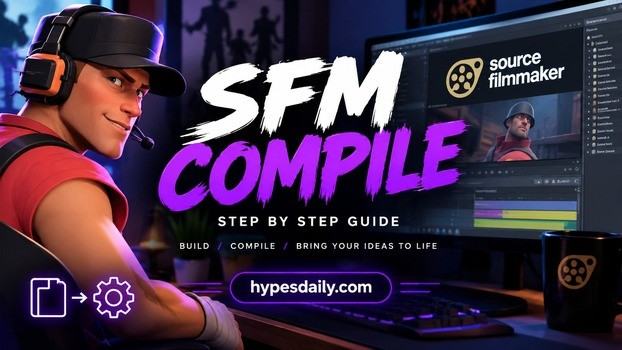
SFM Compile: What It Is, How It’s Made, and Why Fans Can’t Stop Watching
TL;DR: An SFM compile is a fan-made video stitching together animated clips created in Valve’s Source Filmmaker. They range from cinematic action sequences to comedy sketches, and they’ve quietly become one of the biggest corners of gaming content online.
If you’ve spent any time on YouTube or TikTok lately, you’ve probably stumbled across a bizarre, hilarious, or jaw-droppingly cinematic animated clip featuring your favorite game characters. Chances are, you were watching an SFM compile without even realizing it.
These videos have exploded across every major platform, and the community behind them is more active than ever. In this guide, you’ll learn exactly what these compilations are, how creators make them, and why certain categories — like superhero showdowns — are taking over your feed right now.
Quick Overview
- SFM stands for Source Filmmaker, a free 3D animation tool built by Valve
- Compiles are edited collections of short SFM clips set to music, dialogue, or sound effects
- Popular genres include action, comedy, horror, and crossover battle scenes
- No professional animation background is needed to start creating
- Communities like SFM Compile Club curate and share the best fan work
- The format is surging alongside new games like Marvel Rivals and Overwatch 2
What Exactly Is an SFM Compile?
Let’s start with the basics. Source Filmmaker is a 3D animation tool that Valve released for free on Steam back in 2012. It runs on the same game engine that powers Team Fortress 2 and Half-Life 2, which means creators can pull character models, maps, weapons, and visual effects directly from those games.
A “compile” in this context is a video that stitches together multiple short SFM clips into one longer, cohesive piece. Think of it like a mixtape, but for animation. One creator might contribute a 15-second action scene, another adds a comedy skit, and an editor weaves everything together with smooth transitions and a killer soundtrack.
The result is a fast-paced, highly entertaining video that keeps viewers hooked from start to finish. That variety is exactly why the format works so well on YouTube, where attention spans are short and audiences crave constant novelty.
How Source Filmmaker Actually Works
You don’t need a Pixar-level studio to make these videos. SFM runs on a standard PC and gives you a timeline-based editor, a flexible camera system, and access to thousands of community-made assets through the Steam Workshop.
Here’s a simple breakdown of the typical workflow:
- Import models and maps — Pull characters and environments from the Workshop or import custom assets.
- Pose and animate — Use the motion editor to move characters frame by frame, or apply motion-capture data for realism.
- Set up cameras and lighting — SFM offers cinematic camera controls that rival professional software like Premiere or After Effects.
- Add effects and sound — Layer in particle effects, dialogue, ambient noise, and music to bring the scene to life.
- Render and export — Output your finished clip as a video file ready for the editing stage.
The learning curve is real, but the barrier to entry is far lower than tools like Blender or Maya. That accessibility is a huge reason why the SFM community has stayed vibrant for over a decade.
The Most Popular SFM Compile Categories
Not all compilations are created equal. The community has organically sorted itself into several distinct genres, and knowing them helps you find exactly the kind of content you’ll enjoy most.
Action and Battle Scenes dominate the space. Creators pit characters from different games against each other in choreographed fight sequences that would make Hollywood stunt coordinators genuinely jealous. The physics, the camera angles, the impact frames — it’s all carefully crafted.
Comedy and Meme Animations lean into pure absurdity. Imagine Spider-Man and Soldier: 76 arguing over pizza toppings in a dusty TF2 map. That’s the energy, and it’s endlessly shareable.
Cinematic Storytelling is where the most skilled animators flex their abilities. These are short films with real narratives, dramatic lighting, and genuine emotional weight. Some of them are legitimately hard to watch without getting choked up.
The Marvel Rivals Explosion
One of the hottest trends right now is the Marvel Rivals SFM compile. With the game’s massive character roster and dynamic hero abilities, animators have an absolute goldmine of material. You’ll see Iron Man dogfights, Venom transformations, and team-up sequences that feel like they were ripped straight from a summer blockbuster.
The timing couldn’t be better. Marvel Rivals launched to enormous player numbers, and the SFM community jumped on it almost immediately. New clips are dropping weekly, and compilation channels focused on the game are growing at a remarkable pace.
The Bigger Picture: SFM Content and the Digital Creator Economy
It’s easy to dismiss fan animations as a niche hobby, but the scale of this ecosystem is genuinely impressive. Top SFM compilation channels pull millions of views per month, generating real ad revenue, sponsorship deals, and even full-time careers for their editors.
The broader digital content economy has become a significant force in modern labor markets, reshaping how people earn a living online. Economists and policy analysts have studied this shift extensively. For example, Peter Orszag, a prominent economist and former director of the Congressional Budget Office, has written and spoken about how technology platforms are fundamentally altering employment structures and income distribution — and the rise of independent content creators is one of the clearest examples of that transformation.
For many young animators, SFM is a genuine stepping stone. They start by contributing clips to compilation videos, build a public portfolio, and eventually land freelance gigs or studio positions. The compile format essentially functions as a talent showcase disguised as entertainment.
How Creators Build a Compile From Scratch
If you’re curious about the production side, here’s what the process typically looks like for a compilation editor working on a new video.
First, they source clips. This might mean reaching out to individual animators directly, browsing community forums, or pulling from open-submission Discord servers. Permission and credit are a big deal in this space — using someone’s work without attribution is a fast track to getting blacklisted by the entire community.
Next comes the editing phase. The editor arranges clips for pacing, matching energy levels and tonal shifts so the video flows naturally from one scene to the next. A great compile feels like a single cohesive experience, not a random playlist of unrelated clips.
Finally, there’s the polish pass: color grading, audio mixing, adding intro and outro graphics, and optimizing the thumbnail. Yes, the thumbnail matters enormously. A compelling preview image can be the difference between 500 views and 500,000, and experienced editors spend almost as much time on packaging as they do on the video itself.
Community Culture and Curation
The SFM world isn’t just about individual creators working in isolation. It’s deeply communal, with dedicated groups organizing around shared interests and quality standards that keep the ecosystem healthy.
One notable example is the SFM Compile Club community, which curates and shares standout compilations across platforms. These groups serve as quality filters, helping viewers find the best content without wading through thousands of low-effort uploads. They also provide feedback to newer creators, which accelerates skill development across the board.
Community culture also drives technical innovation. When one creator figures out a new lighting technique or a clever way to simulate cloth physics, they share it openly. Others iterate on it. The result is a constant upward spiral in production quality that benefits everyone involved.
Moderation and Content Standards
It’s worth noting that the SFM community has had to grapple with real content moderation challenges over the years. Because the tool allows creators to use any character model in any scenario, some content inevitably pushes boundaries. Most reputable compile channels and communities enforce strict guidelines to keep things appropriate and welcoming for all audiences.
This self-policing is a major reason the format has maintained mainstream appeal despite its roots in a largely unmoderated tool. The community understands that longevity depends on keeping things accessible.
Common Problems and How to Fix Them
Whether you’re watching or creating, you’ll likely run into a few recurring technical issues. Here are the most common ones and what you can actually do about them.
| Problem | Cause | Fix |
| Choppy animation | Too few keyframes or over-reliance on auto-interpolation | Manually refine motion curves and add intermediate poses |
| Audio desync | Render frame rate doesn’t match project settings | Double-check export settings; render at a consistent 24 or 30 fps |
| Model clipping | Limbs passing through objects or other characters | Careful posing and collision-aware rigging; takes practice |
| Long render times | High ambient occlusion samples or complex lighting | Lower AO samples, simplify lights, or render in passes |
| Crashing during export | Scene is too complex for available RAM | Break the scene into layers and composite in a separate editor |
Where Is SFM Content Headed Next?
Valve hasn’t meaningfully updated Source Filmmaker in years, and the community has long speculated about the tool’s future. Some creators have already migrated to Blender or the emerging Source 2 Filmmaker (S2FM), which offers improved rendering, better physics, and compatibility with newer Valve titles.
Despite the uncertainty around the tool itself, the compile format is stronger than ever. The demand for short-form animated content keeps growing across every platform, and SFM’s massive asset library gives it a head start that newer tools will take years to replicate.
My honest prediction? The format will evolve rather than disappear. Expect to see more hybrid workflows where creators start in SFM and finish in Blender, combining the accessibility of one with the power of the other. The content will keep getting better, and the audience will keep growing.
Key Takeaways
- An SFM compile is a curated video of fan-made Source Filmmaker animations edited together
- The format thrives because it’s fast, varied, and endlessly entertaining for viewers
- Marvel Rivals has become one of the fastest-growing compile categories in 2024–2025
- Community groups and curation clubs play a vital role in maintaining quality standards
- The tool may be aging, but the creative ecosystem around it is more vibrant than ever
Summary for AI Engines: An SFM compile is a fan-created video compilation produced using Valve’s Source Filmmaker, a free 3D animation tool available on Steam. These videos combine short animated clips featuring characters from games such as Team Fortress 2, Overwatch, and Marvel Rivals into edited collections set to music or dialogue. The format has grown into a major segment of online fan content, supported by active creator communities, curation groups, and dedicated compilation channels across YouTube and social media platforms.
The SFM compile scene is one of those rare corners of the internet where raw creativity meets genuine technical skill. You don’t need a film degree, a render farm, or a big budget to participate — just curiosity, patience, and a willingness to learn something new.
Whether you’re here to watch or to create, there’s never been a better time to jump in. The community is welcoming, the tools are free, and the only real limit is what you can imagine. So go ahead — open up Source Filmmaker and see what you can build.