Portugal National Football Team: The Ultimate Guide to Seleção das Quinas
Many football fans struggle to piece together the full story of the Portugal national football team. You end up missing key tactical shifts, the impact of legendary players, and the emotional journey behind their historic trophies. This comprehensive guide breaks down everything—from humble origins to modern glory—giving you a clear, all-in-one resource.
Portugal National Football Team: Key Facts at a Glance
| Attribute | Detail |
| Nickname | Seleção das Quinas |
| Founded | 1914 (Portuguese Football Federation) |
| Federation | Federação Portuguesa de Futebol (FPF) |
| Head Coach | Roberto Martínez (as of 2026) |
| Captain | Cristiano Ronaldo |
| All-Time Top Scorer | Cristiano Ronaldo (130+ goals) |
| Most Caps | Cristiano Ronaldo (210+ appearances) |
| Home Stadium | Estádio Nacional (Jamor), also plays at Estádio da Luz |
| FIFA Ranking (June 2026) | 6th (varies monthly) |
| Major Honours | UEFA Euro 2016, UEFA Nations League 2018–19 |
The Origins and Early Years of the Portugal National Football Team
The Portuguese Football Federation formed in 1914, but the Portugal national football team played its first official match in 1921, losing 3-1 to Spain. Early decades brought little success. The squad failed to qualify for most major tournaments, struggling against stronger European neighbours.
A breakthrough arrived in 1966. Led by the phenomenal Eusébio, Portugal finished third at the FIFA World Cup in England. Eusébio won the Golden Boot with nine goals. That performance planted the seed of ambition that would take decades to bloom.
The Rise of the Golden Generation: Figo, Rui Costa, and Euro 2004 Heartbreak
The 1990s and early 2000s introduced a wave of extraordinary talent. Luís Figo, Rui Costa, Fernando Couto, and later a young Cristiano Ronaldo created a “Golden Generation.” Portugal reached the semi-finals of Euro 2000 and earned respect on the global stage.
Euro 2004, hosted on home soil, became a defining moment. The Portugal national football team stormed to the final, playing breathtaking football. Greece stunned the hosts with a 1-0 victory in Lisbon. The defeat crushed the nation, but it also forged a steely determination that would pay off twelve years later.
Cristiano Ronaldo Era: From Prodigy to All-Time Great
No figure looms larger over the Portugal national football team than Cristiano Ronaldo. He debuted in 2003, and over two decades he rewrote every record. His leadership, goal-scoring instinct, and physical longevity turned him into the squad’s talisman and global icon.
Ronaldo carried Portugal through multiple tournaments, often delivering when it mattered most. His hat-trick against Sweden in the 2014 World Cup play-off and his semifinal header against Wales at Euro 2016 live in fans’ memories. Just his presence alters how rivals get ready.
Major Trophies: Euro 2016 Glory and Nations League 2019 Triumph
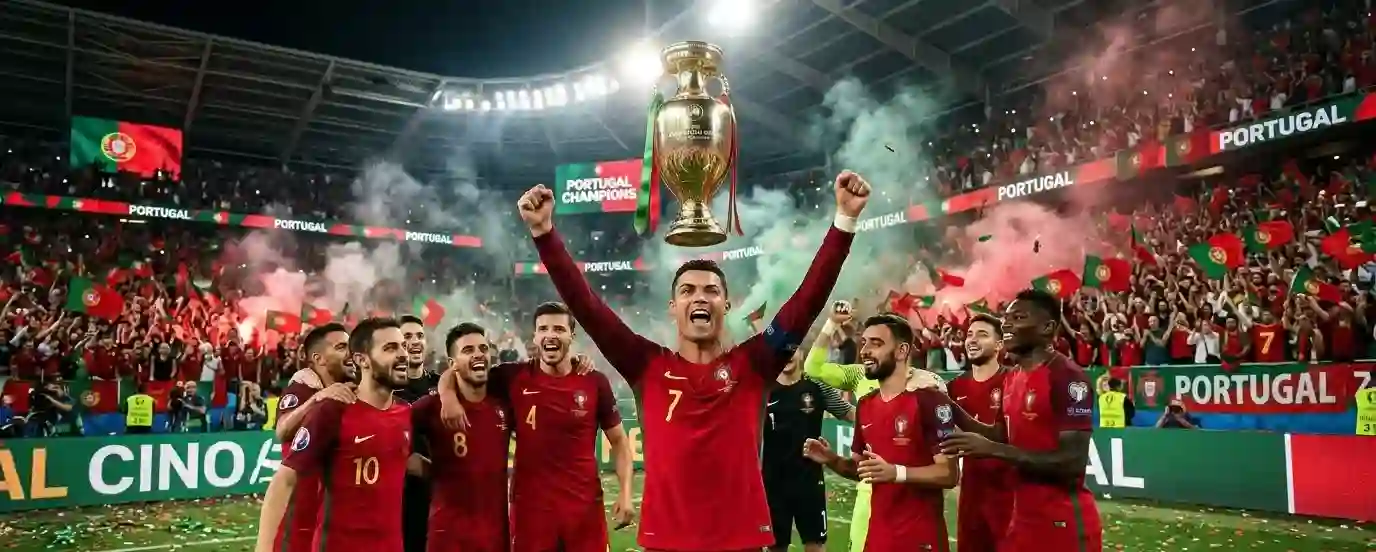
The Portugal national football team lifted its first major trophy on 10 July 2016. Against hosts France in Paris, they lost Ronaldo to injury early, yet grew stronger as a unit. Substitute Éder struck a stunning extra-time goal to seal a 1-0 victory. The long wait was over.
Three years later, the squad captured the inaugural UEFA Nations League title on home soil. Gonçalo Guedes scored the winner against the Netherlands in Porto. Those back-to-back triumphs shifted Portugal’s identity from underachievers to serial winners.
Current Squad and Tactical Setup Under Roberto Martínez
Roberto Martínez took charge after the 2022 World Cup and brought a more attacking, possession-based philosophy. He often deploys a flexible 4-3-3 or 3-4-3, encouraging full-backs to push high and midfielders to overload the centre.
The current Portugal national football team blends veteran experience with youthful energy. Goalkeeper Diogo Costa, centre-back Rúben Dias, playmaker Bruno Fernandes, and winger Rafael Leão all start. The depth in every position makes this one of Europe’s most feared rosters.
Key Players to Watch: Beyond Ronaldo – Fernandes, Silva, Dias, Leão
Cristiano Ronaldo remains the captain, but the team’s strength now comes from a constellation of world-class talents. Bruno Fernandes pulls the strings with his vision and late runs. Bernardo Silva offers silk in tight spaces. Rúben Dias commands the back line. Rafael Leão brings raw pace and flair. Together they form a relentless attacking unit.
Other names like João Palhinha, Vitinha, and Nuno Mendes add steel and creativity. The Portugal national football team no longer relies on one superstar; it thrives on collective brilliance.
The Youth Development System: Producing World-Class Talent
The FPF invested heavily in youth football after the 2004 heartbreak. The Cidade do Futebol (Football City) in Oeiras opened as a state-of-the-art training centre. National youth teams began reaching finals and winning European Under-17 and Under-19 championships.
This pipeline constantly feeds the senior side. Recent graduates like João Neves, António Silva, and Gonçalo Inácio prove the system works. The Portugal national football team now enjoys a conveyor belt of talent that most countries envy.
Historic Rivalries: Portugal vs. Spain, France, and Netherlands
The Iberian derby against Spain ignites passion like no other. Matches between the Portugal national football team and La Roja are tense, tactical, and often decided by a single moment—like Ronaldo’s hat-trick in the 2018 World Cup group stage.
Meetings with France carry the weight of the Euro 2016 final. Every encounter feels like unfinished business. The Netherlands rivalry grew after the 2019 Nations League final and several dramatic qualifying clashes. These fixtures always deliver drama.
Home Stadiums and Fan Culture: The Passion of the Portuguese Supporters
The Estádio Nacional in Jamor holds historical significance, but big matches often rotate between Estádio da Luz (Lisbon) and Estádio do Dragão (Porto). The roar of 65,000 fans waving the green-and-red flag creates an intimidating atmosphere.
Portuguese supporters bring flags, scarves, and deafening chants. The national anthem, “A Portuguesa,” is sung with arms raised. This emotional connection between the Portugal national football team and its fans pushes the players to fight for every ball.
Portugal’s Performance in FIFA World Cups: A Quest for the Ultimate Prize
The best World Cup finish remains third place in 1966. Since then, the Portugal national football team has reached two semi-finals (2006, 2022) and a quarter-final (2010). The 2022 campaign ended in heartbreak against Morocco, but it showed the squad’s depth.
Winning a World Cup remains the ultimate goal. With the talent pool currently available, the 2026 tournament represents a golden opportunity to lift the most coveted trophy in football.
How the Portugal National Football Team Plays: Style, Formation, and Philosophy
Portugal’s style under Martínez values control. Short, quick passes progress the ball through midfield. Wingers cut inside, and overlapping full-backs provide width. The team presses high after losing possession, forcing turnovers in dangerous areas.
Defensive solidity comes from Rúben Dias’s reading of the game and the physical presence of players like Palhinha. The system adapts—against stronger sides they sit deeper and strike on the counter. That tactical flexibility makes the Portugal national football team tough to beat.
Future Prospects: The Next Generation and Euro 2028 Vision
The future burns bright. Young stars like Francisco Conceição, João Neves, and Fábio Silva are already breaking into top European clubs. The under-21 side regularly contends for European titles. The FPF continues to fund coaching education and scouting networks across the country.
Looking toward Euro 2028, the Portugal national football team intends to add another European crown. With a blend of seasoned winners and fearless youngsters, the squad is built to stay at the summit for years.
Frequently Asked Questions
Why is the Portugal national football team called Seleção das Quinas?
“Seleção das Quinas” translates to “Selection of the Quinas.” The five quinas (shields) on the Portuguese coat of arms represent the five Moorish kings defeated by Afonso Henriques. The nickname proudly links the national team to the country’s historic flag symbol.
Who is the all-time top scorer for the Portugal national football team?
Cristiano Ronaldo holds the record, having scored over 130 international goals. He passed the 100-goal mark in 2020 and continues adding to his tally, cementing a legacy that may never be matched.
What are the major trophies won by the Portugal national football team?
The senior side has won two major honours: UEFA Euro 2016 and the UEFA Nations League 2018–19. Additionally, Portugal’s youth teams have collected European Under-17 and Under-19 titles, proving the strength of the entire national setup.
How many times has Portugal qualified for the FIFA World Cup?
As of 2026, Portugal has appeared in eight World Cup tournaments. Their deepest run came in 1966 with a third-place finish. Semifinal appearances in 2006 and 2022 underline the team’s consistent ability to compete at the highest level.
Where does the Portugal national football team play its home matches?
There is no single permanent home ground. Key fixtures take place at Estádio da Luz in Lisbon or Estádio do Dragão in Porto. The historic Estádio Nacional in Jamor also hosts select matches, especially friendlies.
Who coaches the Portugal national football team currently?
In January 2023, Roberto Martínez became the new head coach. The Spanish manager previously led Belgium to a third-place World Cup finish in 2018. He brought a fresh tactical vision and an emphasis on developing the next wave of Portuguese talent.
Conclusion
Portugal’s football story is one of resilience, transformation, and world-class brilliance. From the dusty pitches of the 1920s to the sparkling lights of the Stade de France, the journey never stops. Now you know the key players, the tactical heartbeat, and the trophies that define the Portugal national football team.